In a disaster, professional medical help can be hours or days away. Roads flood, 911 lines overload, and hospitals fill past capacity. The gap between an injury and professional care is exactly where a good first aid or trauma kit saves a life. Yet most households own nothing more than a handful of adhesive bandages in a bathroom drawer.
Our top pick is the My Medic MyFAK Standard because it combines everyday first aid supplies with trauma essentials like a tourniquet and pressure dressing in one organized, modular kit. For the best comprehensive value, the Surviveware 238-Piece kit is hard to beat.
A kit is only as good as the skill behind it. Pair any kit with a Stop the Bleed or basic first aid course, and review our First-Time Prepper Guide to build a complete plan.
Our Top 6 Picks at a Glance
| Kit | Best For | Type | Price |
|---|---|---|---|
| My Medic MyFAK Standard | Best Overall | First Aid + Trauma | Under $250 |
| Surviveware 238-Piece | Best Comprehensive Value | First Aid | Under $100 |
| First Aid Only OSHA Kit | Best Budget / Home & Office | First Aid | Under $50 |
| THRIAID Trauma Kit | Best Trauma Value | Trauma / IFAK | Under $100 |
| My Medic MyFAK PRO | Best Premium Trauma | Trauma / IFAK | Under $500 |
| Surviveware 98-Piece | Best Compact / Bug-Out | First Aid | Under $50 |
1. My Medic MyFAK Standard: Best Overall

My Medic MyFAK Standard
A modular kit that bridges everyday first aid and life-threatening trauma, with a tourniquet, pressure dressing, and organized, color-coded modules in a rugged carry case.
Most kits are either basic first aid or pure trauma. The My Medic MyFAK Standard does both, which is exactly what a single household preparedness kit should do. It carries the everyday supplies you reach for constantly (bandages, gauze, antiseptic, medications, burn care) alongside the trauma tools that matter when seconds count: a tourniquet and a pressure dressing for serious bleeding.
What sets it apart is organization. The supplies are grouped into labeled modules so you can find the right item under stress instead of dumping the bag out. The rugged case holds up to vehicle and outdoor use, and the kit qualifies for HSA and FSA spending. For one kit that covers the widest range of real emergencies, this is our top recommendation.
Who it's for: Families and preppers who want a single, organized kit that handles both everyday injuries and life-threatening trauma.
What We Like
- Covers first aid and trauma in one kit
- Includes a tourniquet and pressure dressing
- Color-coded modular organization
- Rugged, durable carry case
- HSA and FSA eligible
Limitations
- Higher price than basic kits
- Larger than a pocket IFAK
- Trauma tools require training to use
2. Surviveware 238-Piece Kit: Best Comprehensive Value
Surviveware 238-Piece First Aid Kit
A comprehensive, well-organized kit with 238 quality supplies, laminated labels on every compartment, and a durable water-resistant bag with MOLLE attachment.
Surviveware has built a strong reputation among preppers for kits that punch above their price. The 238-piece version is the comprehensive home-base option: enough supplies to handle a family through multiple incidents, organized into clearly labeled internal compartments so nothing is buried. The supplies themselves are higher quality than the random bandage assortments found in cheap kits.
The water-resistant bag is genuinely durable and includes MOLLE webbing so it can attach to a larger pack or vehicle organizer. Every compartment carries a laminated label listing its contents, which makes restocking and finding items fast. For a comprehensive kit that does not cross into trauma-kit pricing, this is the best value on the list.
Who it's for: Families wanting a thorough, well-organized first aid kit for the home or a base camp without paying premium trauma-kit prices.
What We Like
- 238 quality supplies
- Laminated labels in every compartment
- Durable water-resistant bag
- MOLLE compatible
- Strong value for the contents
Limitations
- No tourniquet included
- Not a dedicated trauma kit
- Larger footprint for a backpack
3. First Aid Only OSHA Kit: Best Budget Pick

First Aid Only OSHA-Compliant Kit
An affordable, OSHA-compliant all-purpose kit stocked for up to 100 people, with a wall-mountable case ideal for home, office, garage, or classroom.
Not every kit needs to be a trauma-ready go-bag. For covering the constant stream of minor injuries at home, in the workplace, or in a classroom, the First Aid Only OSHA kit delivers organized basics at an unbeatable price. It meets OSHA workplace requirements for up to 100 people and mounts on a wall so it is always in a known, fixed location.
At under $50, it is cheap enough to place several around the house, in the garage, and in vehicles so help is never far away. It is not a trauma kit (no tourniquet or hemostatic gauze), but as the everyday first-response layer of a complete preparedness plan, it is the smartest dollar-for-dollar buy on the list.
Who it's for: Budget-minded households, small businesses, and anyone who wants multiple affordable kits placed where injuries actually happen.
What We Like
- Under $50
- OSHA compliant for 100 people
- Wall-mountable fixed location
- Cheap enough to buy several
- Organized, clearly stocked basics
Limitations
- No trauma supplies
- Basic bandages and consumables
- Hard case is less portable
4. THRIAID Trauma Kit: Best Trauma Value
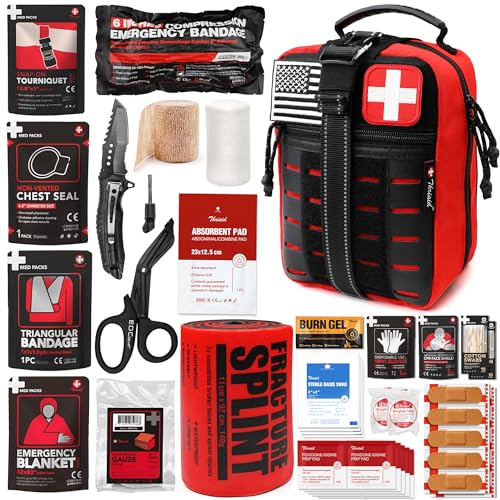
THRIAID Survival First Aid & Trauma Kit
A compact IFAK-style trauma kit that includes the bleeding-control essentials: a tourniquet, Israeli pressure bandage, chest seal, and splint, plus core first aid supplies.
A first aid kit treats cuts and scrapes; a trauma kit keeps someone alive long enough to reach a hospital. The THRIAID kit packs the four pillars of bleeding control into one compact, affordable package: a tourniquet to stop limb hemorrhage, an Israeli pressure bandage, a chest seal for penetrating chest wounds, and a splint for fractures. It also includes core first aid consumables for the lower-severity injuries.
At under $100, it brings trauma capability within reach of any budget. Stash one in each vehicle, your bug-out bag, and near the front door. As with any trauma gear, the contents only help if you know how to use them, so pair it with a Stop the Bleed course. For affordable trauma readiness, this is the value leader.
Who it's for: Preppers who want affordable bleeding-control capability in vehicles, bug-out bags, and home kits.
What We Like
- Tourniquet, chest seal, and pressure bandage
- Splint for fractures
- Compact, packable size
- Affordable trauma capability
- Good fit for vehicles and go-bags
Limitations
- Requires training to use safely
- Fewer everyday first aid consumables
- Generic-brand trauma components
5. My Medic MyFAK PRO: Best Premium Trauma Kit
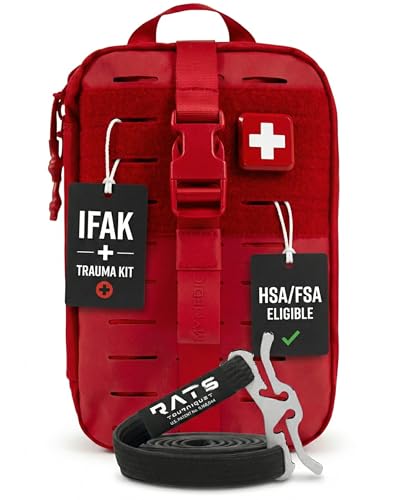
My Medic MyFAK PRO
The upgraded, fully loaded version of the MyFAK with expanded trauma supplies, a tourniquet, and premium components for serious preparedness and skilled users.
For those who want the most capable kit available, the MyFAK PRO is My Medic's flagship. It expands on the Standard with a deeper inventory of trauma supplies, additional bleeding-control tools, and premium components throughout, all in the same well-organized modular layout. It is the kit to own if you have medical training or want the broadest possible capability for serious, extended scenarios.
At under $500 it is a significant investment, and it is overkill for someone who only needs basic first aid. But for trained responders, remote families, and preppers building toward self-sufficiency, the PRO delivers comprehensive coverage in one professionally organized package. It is also HSA and FSA eligible.
Who it's for: Trained responders, remote and rural households, and serious preppers who want maximum trauma capability in one kit.
What We Like
- Expanded trauma and bleeding-control supplies
- Premium components throughout
- Includes a tourniquet
- Excellent modular organization
- HSA and FSA eligible
Limitations
- Premium price
- Overkill for basic needs
- Best used with medical training
6. Surviveware 98-Piece Kit: Best Compact / Bug-Out

Surviveware 98-Piece Compact Kit
A lightweight, water-resistant kit with the same quality and labeled organization as its bigger sibling, sized to ride in a bug-out bag, daypack, or glovebox.
Every bug-out bag needs a first aid kit, but a comprehensive home kit is too bulky to carry. The Surviveware 98-piece kit solves that with the brand's signature quality and labeled organization in a compact, lightweight package. It covers the injuries you are most likely to face on the move: cuts, blisters, sprains, burns, and minor wounds, without weighing down your pack.
The water-resistant bag keeps supplies dry, and the laminated compartment labels make finding the right item fast even in poor light. At under $50 it is affordable enough to put one in every bag and vehicle. Pair it with a compact trauma kit and you have both everyday and emergency bleeding coverage on the go.
Who it's for: Anyone outfitting a bug-out bag, daypack, vehicle, or office drawer with a quality compact kit.
What We Like
- Lightweight and packable
- Same quality as larger Surviveware kits
- Labeled compartments
- Water-resistant bag
- Affordable enough to buy several
Limitations
- No trauma supplies
- Fewer consumables than full kits
- Best paired with a trauma kit
How We Chose
We did not test these kits on real injuries, and nothing in this guide is medical advice. Instead, we researched and compared 30+ first aid and trauma kits using manufacturer contents lists, the presence and quality of trauma components (tourniquet, hemostatic gauze, chest seal, pressure bandage), organization and durability, intended use case, and patterns across hundreds of verified owner reviews. We weighed each kit against the scenario it is best suited for. Contents and prices change, so confirm the current contents list on the product page before buying.
Researched, Not Professional Medical Advice
This guide is researched and educational, not professional emergency or medical advice. Recommendations are based on published specs and verified owner reviews, not in-person testing. A kit does not replace training. Take a certified first aid, CPR, and Stop the Bleed course, follow all product instructions, and call 911 or seek professional care in any real emergency. Use these products at your own risk.
Buyer's Guide: Choosing a First Aid or Trauma Kit
First Aid vs. Trauma: Know the Difference
First aid kits handle the common stuff: cuts, burns, blisters, sprains, headaches, and allergic reactions. Trauma kits (IFAKs) handle life threats: severe bleeding, penetrating wounds, and fractures, using tourniquets, hemostatic gauze, chest seals, and pressure bandages. Complete preparedness means owning both layers.
Build a Layered Medical System
- Home base: A comprehensive kit like the My Medic MyFAK Standard or Surviveware 238-piece.
- Each vehicle: A compact first aid kit plus a trauma kit, since car wrecks are a leading trauma cause.
- Bug-out bag: A lightweight kit like the Surviveware 98-piece.
- Everyday carry: A pocket tourniquet and pressure bandage if you are trained to use them.
Match the Kit to Your Training
Trauma tools only help if you know how to use them. A tourniquet applied incorrectly can fail when it matters most. Before relying on trauma gear, take a Stop the Bleed course (often free) and a basic first aid and CPR class. Skill plus supplies saves lives; supplies alone often do not.
Inspect and Restock Every Year
Medications, ointments, adhesives, hemostatic gauze, and chest seals all expire. Check every kit at least once a year, replace anything used or expired, and add personal prescriptions your family depends on. A neglected kit can fail at the worst possible moment.
Upgrade Pick and What You'll Also Need
A kit is a starting point. These are the items trauma instructors most often tell people to add, plus the step up.
- Upgrade pick: the My Medic MyFAK PRO adds a tourniquet and a fuller trauma module to the standard kit.
- A genuine tourniquet: the North American Rescue C-A-T Gen 7. Buy from a listing sold by the maker or an authorized seller; counterfeit tourniquets are a known problem.
- Hemostatic gauze: QuikClot kaolin clotting gauze for wounds a tourniquet cannot reach.
- Training: a free Stop the Bleed course (listed at stopthebleed.org) teaches how to use all of the above.
Building a full kit for the household? Our emergency setups list everything by duration: 72 hours, 2 weeks, 30 days and long term.
Deal season note: Prices on these often drop during Prime Big Deal Days and Black Friday. The picks above were checked against live Amazon listings for 2026; click through for the current price.
Sources
- American College of Surgeons, Stop the Bleed program
- OSHA 29 CFR 1910.151 and ANSI/ISEA Z308.1 first aid kit standards
- Manufacturer contents lists for each kit
Researched from published specifications, standards and verified owner reviews, not hands-on testing. Not medical advice.
Frequently Asked Questions
What is the difference between a first aid kit and a trauma kit?
A first aid kit handles everyday injuries like cuts, burns, and sprains with bandages, gauze, and medications. A trauma kit, or IFAK, is built to control life-threatening bleeding and includes a tourniquet, hemostatic gauze, a pressure bandage, and a chest seal. Serious preparedness means having both.
What should be in a good emergency first aid kit?
Adhesive bandages in multiple sizes, sterile gauze, medical tape, antiseptic wipes, antibiotic ointment, burn gel, trauma shears, tweezers, nitrile gloves, a CPR shield, an emergency blanket, and over-the-counter medications. For emergencies, add a tourniquet, a pressure bandage, and any personal prescriptions.
Do I need a tourniquet in my first aid kit?
Uncontrolled limb bleeding can be fatal in minutes, and a tourniquet is the most effective tool to stop it. Including one in home, vehicle, and bug-out kits is strongly recommended, but only if you learn to use it. Choose a windlass-style tourniquet and take a Stop the Bleed course.
How many first aid kits should I have?
A layered approach works best: one comprehensive kit at home, a compact kit in each vehicle, and a lightweight kit in every bug-out bag. Add a small trauma kit alongside each, since trauma can happen anywhere. Match kit size to location so appropriate supplies are always within reach.
Do first aid kit supplies expire?
Yes. Medications, antiseptic wipes, ointments, adhesives, hemostatic gauze, and chest seals all expire, and sterile packaging degrades over time. Check your kits at least once a year, replace anything expired or used, and note medication dates. A kit you never inspect may fail when you need it.
Should I buy a pre-made kit or build my own?
Pre-made kits are the fastest, most cost-effective way to get a solid, organized baseline. Most preppers start with a quality pre-made kit and then customize it with personal prescriptions, extra trauma supplies, and frequently used consumables. Building entirely from scratch usually costs more and takes longer.
Related Resources
Emergency Kit Calculator
Size a complete kit for your household
Best Bug-Out Bags
The pack to carry your kit in
First-Time Prepper Guide
Build a complete preparedness plan
Bug-Out Bag Builder
Build your complete go-bag setup
From the Creators of DisasterPrepCalc
The Complete Survival Guide for America 2026
Everything you need to protect your family, from natural disasters to grid failures. Available on Amazon.
Get the Book on Amazon →As an Amazon Associate, we earn from qualifying purchases.