Firewood Cord Calculator
Figure out how much wood you need to cut, split, and season for the winter — plus the gear that gets it done.
Calculate How Much Firewood You Need
Enter your home and heating details to estimate the cords of firewood you need to cut, split, and season for the season — plus what it would cost to buy.
Your Home
Climate & Usage
Your Firewood Requirement
What This Means
Enter your details and calculate to see your firewood plan.
Recommended Splitting Setup
Want to keep this result?
Get this result plus the free printable emergency prep shopping list by email.
Free. No spam. Unsubscribe anytime.
Firewood Cutting & Splitting Gear
The right tools turn a chore into a weekend. Below is the gear that actually gets a woodpile cut, split, and seasoned — matched to how much wood you burn.
 Hand splitting
Fiskars 8 lb Splitting Maul
$69.99
View on Amazon
Hand splitting
Fiskars 8 lb Splitting Maul
$69.99
View on Amazon
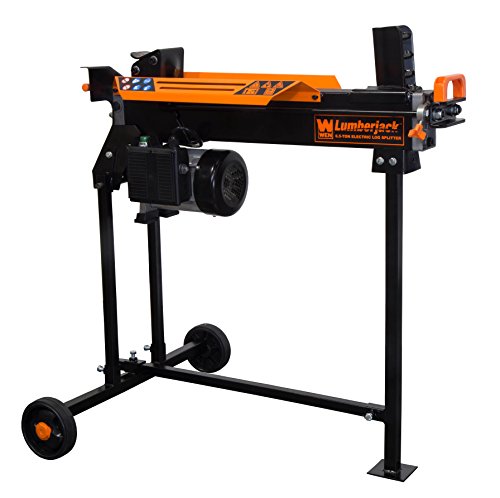 1-3 cords/yr
WEN 6.5-Ton Electric Log Splitter
$299
View on Amazon
1-3 cords/yr
WEN 6.5-Ton Electric Log Splitter
$299
View on Amazon
 3+ cords/yr
BILT HARD 25-Ton Gas Log Splitter
$1,399
View on Amazon
3+ cords/yr
BILT HARD 25-Ton Gas Log Splitter
$1,399
View on Amazon
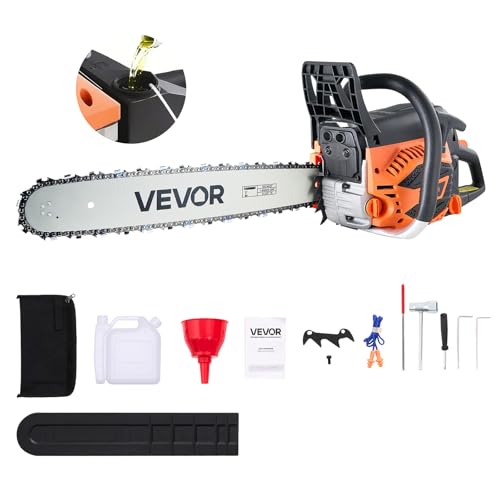 Bucking rounds
VEVOR 20" Gas Chainsaw
$115
View on Amazon
Bucking rounds
VEVOR 20" Gas Chainsaw
$115
View on Amazon
 Check seasoning
Mecurate Wood Moisture Meter
$27.99
View on Amazon
Check seasoning
Mecurate Wood Moisture Meter
$27.99
View on Amazon
 Safe kindling
Kindling Cracker Firewood Splitter
$69.99
View on Amazon
Safe kindling
Kindling Cracker Firewood Splitter
$69.99
View on Amazon
 Hand protection
Wells Lamont Leather Work Gloves
$15.99
View on Amazon
Hand protection
Wells Lamont Leather Work Gloves
$15.99
View on Amazon
 Keep chain sharp
Sharp Pebble Chainsaw Sharpener Kit
$39.99
View on Amazon
Keep chain sharp
Sharp Pebble Chainsaw Sharpener Kit
$39.99
View on Amazon
Split and Season Early
Green (freshly cut) firewood is 40-60% water and won't burn cleanly. Split and stack it at least 6-12 months before you burn it — a full year for oak. Wet wood wastes heat boiling off water, smokes badly, and coats your chimney with creosote. A cheap moisture meter tells you when it's ready: aim for under 20% moisture.
Store It Right So It Actually Dries
Stacked wrong, even split wood stays wet. Keep it off the ground, cover only the top, and leave the sides open to airflow.
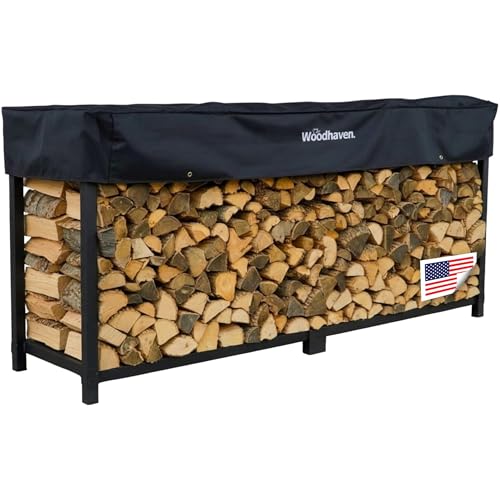 ½-cord storage
Woodhaven 8-Foot Firewood Rack
$250
View on Amazon
½-cord storage
Woodhaven 8-Foot Firewood Rack
$250
View on Amazon
 Keep it dry
Himal Waterproof Firewood Cover
$29.99
View on Amazon
Keep it dry
Himal Waterproof Firewood Cover
$29.99
View on Amazon
 Haul indoors
INNO STAGE Waxed Canvas Log Carrier
$23.74
View on Amazon
Haul indoors
INNO STAGE Waxed Canvas Log Carrier
$23.74
View on Amazon
Stacking Rules
Use a rack, pallets, or rails. Ground contact wicks moisture and invites rot and bugs.
A tarp over the whole pile traps moisture. Cover the top foot; leave the sides open to sun and wind.
Stack where it gets afternoon sun and prevailing wind. Bark side up on the top row to shed rain.
Bring in a few days' worth at a time to a rack near the stove so it's bone-dry and warm when you burn it.
What Is a Cord of Wood?
A full cord is a stacked pile measuring 4 feet high × 4 feet deep × 8 feet long — 128 cubic feet of wood and air. Because logs don't pack perfectly, a full cord holds roughly 70-90 cubic feet of actual wood.
A face cord (or "rick") is 4 feet high × 8 feet long but only as deep as the logs are long — usually 16 inches. That makes a face cord about one-third of a full cord. Always ask which one a seller means: "a cord" of 16-inch splits is often really a face cord at full-cord prices.
| Measure | Dimensions | Volume | Fraction of Full Cord |
|---|---|---|---|
| Full cord | 4' × 4' × 8' | 128 ft³ | 1 |
| Face cord (16") | 4' × 8' × 16" | ~43 ft³ | ~1/3 |
| Face cord (24") | 4' × 8' × 24" | ~64 ft³ | ~1/2 |
| Half cord | 4' × 4' × 4' | 64 ft³ | 1/2 |
How Much Wood Do You Really Burn?
These are real-world rules of thumb for a full heating season. Your number depends on climate, insulation, stove efficiency, and how warm you keep the house.
- Primary heat, cold climate: 4-6 full cords of hardwood.
- Primary heat, moderate climate: 3-4 cords.
- Supplemental / weekend fires: 1-2 cords.
- Softwood only: add 40-60% more volume — it has far less heat per cord than oak or hickory.
Buy or cut more than you think you need. Running out in February with green wood on the ground is miserable. Extra seasoned wood keeps for years if it stays dry.
Frequently Asked Questions
How many cords of wood do I need for winter?
Most homes heated primarily with wood burn 3-5 full cords of hardwood per winter, and 4-6 cords in cold northern climates. Supplemental or weekend use runs 1-2 cords. Softwoods like pine need 40-60% more volume for the same heat. Enter your home size and climate above for a personalized estimate.
How long does it take to split a cord of wood?
By hand with a maul, a fit person splits a cord in roughly 4-8 hours depending on the wood and log size. A powered log splitter cuts that to 1-2 hours per cord and saves your back — worth it once you're doing more than a cord or two a year.
What size log splitter do I need?
For 1-3 cords a year of average hardwood, a 6-7 ton electric splitter handles most rounds. For 3+ cords, big rounds, knotty wood, or dense species like oak and elm, step up to a 20-30+ ton gas splitter. Hand splitting with a maul works for small amounts of straight-grained wood.
How long does firewood need to season?
Split firewood needs 6-12 months of drying to reach a safe burning moisture below 20%. Dense hardwoods like oak need a full year or more. Softwoods can be ready in 3-6 months. Split it, stack it off the ground, cover only the top, and check with a moisture meter before burning.
What's the difference between a cord and a face cord?
A full cord is 128 cubic feet (4' × 4' × 8' stacked). A face cord is 4' × 8' but only one log-length deep — usually 16 inches — so it's about one-third of a full cord. Many sellers advertise "a cord" that's really a face cord, so always confirm the dimensions.
How much does a cord of firewood cost?
Seasoned hardwood typically runs \$200-\$400 per full cord delivered, more in cities and cold-climate winters. Green (unseasoned) wood is cheaper but needs months of drying. Cutting and splitting your own drops the cost to fuel, chain, and labor.
Disclaimer: This calculator is for general informational and planning purposes only. Results are estimates based on published averages and typical conditions, and your actual results will vary. This is researched general guidance, not professional advice. Always follow manufacturer instructions, have heating appliances and chimneys professionally inspected, use carbon monoxide detectors, and comply with local fire codes.
Affiliate Disclosure: This page contains affiliate links. If you purchase products through these links, we may earn a small commission at no additional cost to you. This helps support DisasterPrepCalc and allows us to continue providing free preparedness resources. Read our full disclosure.
From the Creators of DisasterPrepCalc
The Complete Survival Guide for America 2026
Everything you need to protect your family — from natural disasters to grid failures. Available on Amazon.
Get the Book on Amazon →As an Amazon Associate, we earn from qualifying purchases.